


Skip to main content.
YOSHINO WOOD
The only wood of its kind in the world.
The only tradition of its kind in the world.

scroll
ABOUT
About YOSHINO WOOD
Japanese cedar and Japanese cypress are Japan’s most representative evergreen conifers.
In particular, cedar and cypress trees which are grown in Yoshino, in Japan’s Nara Prefecture, are known as “Yoshino wood” and are celebrated as superior japanese timber.
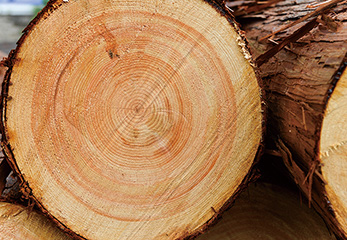
The distinctive characteristics of this wood are uniform and dense annual rings, few knots and a beautiful color.
It is believed that the first trees planted in Japan for commercial afforestation purposes were in Yoshino area about 500 years ago.
As a result of a distinguished forestry tradition that continues to this day, “Yoshino wood” is created through endless efforts across several generations.
About Nara:
Japan’s first capital, it served as the easternmost station on the Silk Road and it boasts the world’s oldest wooden building, Horyuji Temple (UNESCO World Heritage Site)
ARTICLES
Discovering Yoshino Wood
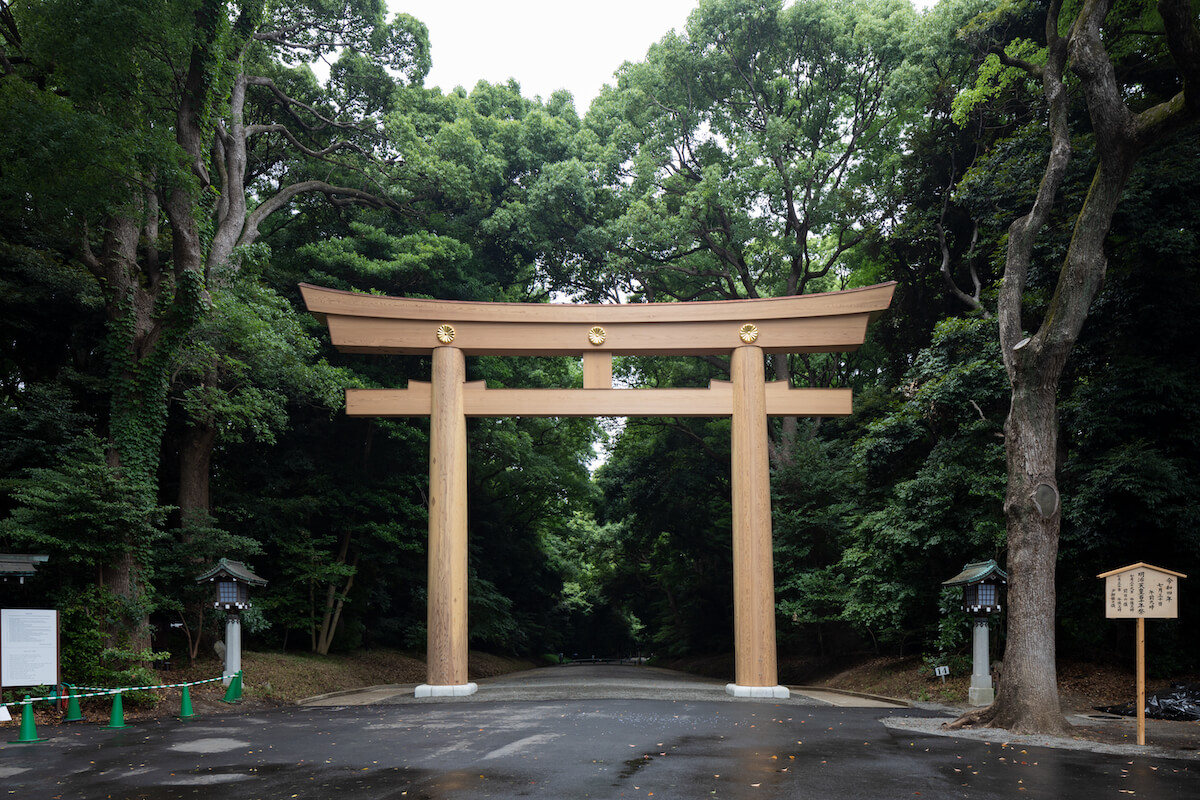 Rebuilding Meiji Shrine’s First Torii Gate After 100 Years ? Tracing its Path and the Significance of Yoshino CedarLocated in the heart of Tokyo, Meiji Shrine (Meiji Jingu) is surrounded by a lush forest that offers a serene contrast to the city’s bustle. Dedicated to Emperor Meiji—who led Japan’s modernization—and Empress Shoken, the shrine has long been one of Japan’s most visited sacred sites, drawing millions each New Year since its founding.January 22, 2026
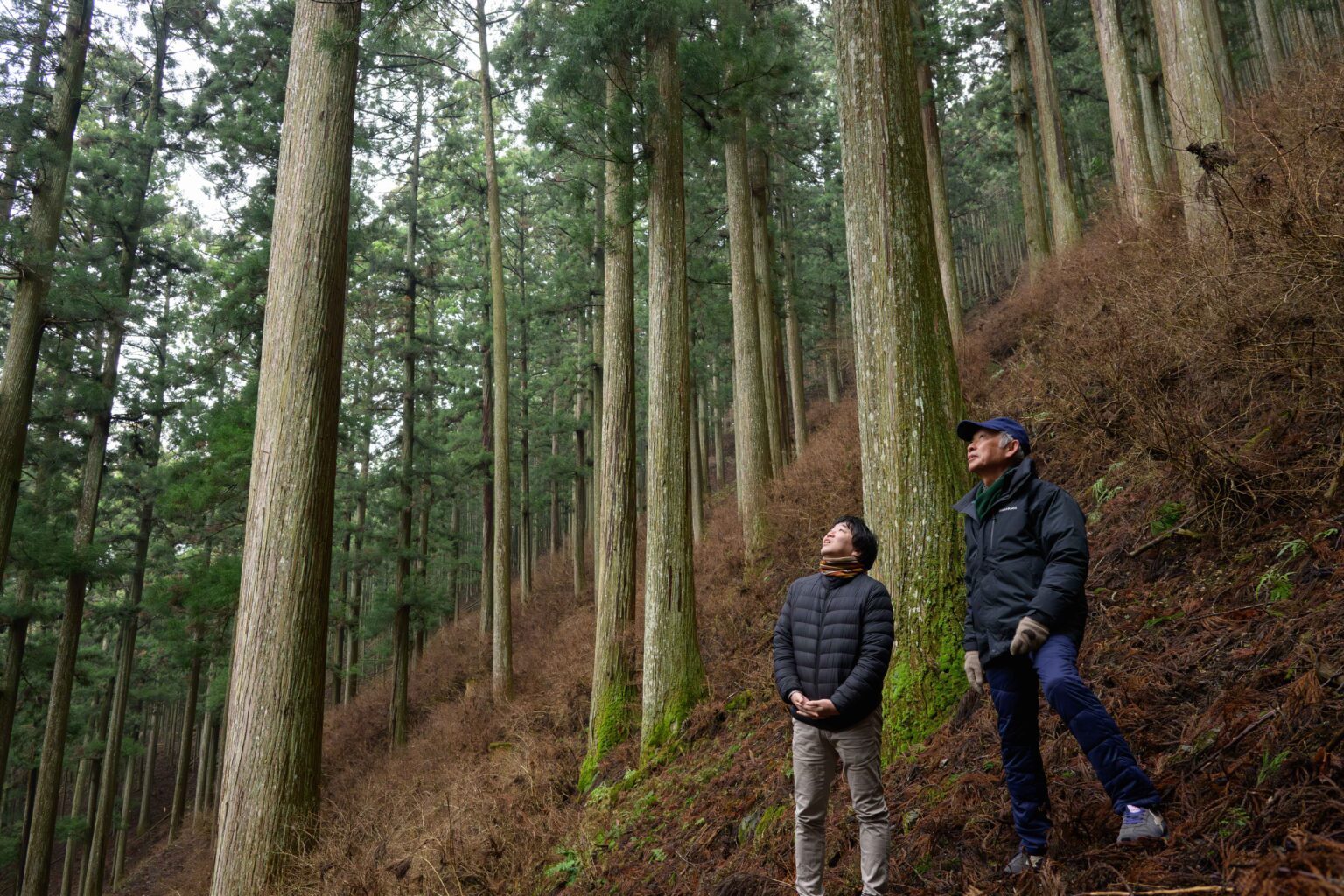 Interview with Two Contemporary Forest Owners: A New Form of Forestry to “Protect the Mountains”Yoshino cypress and Yoshino cedar—known for their beautiful color, minimal knots, and dense annual rings—have long been used in the construction of shrines and temples, and as material for sake barrels.January 22, 2026
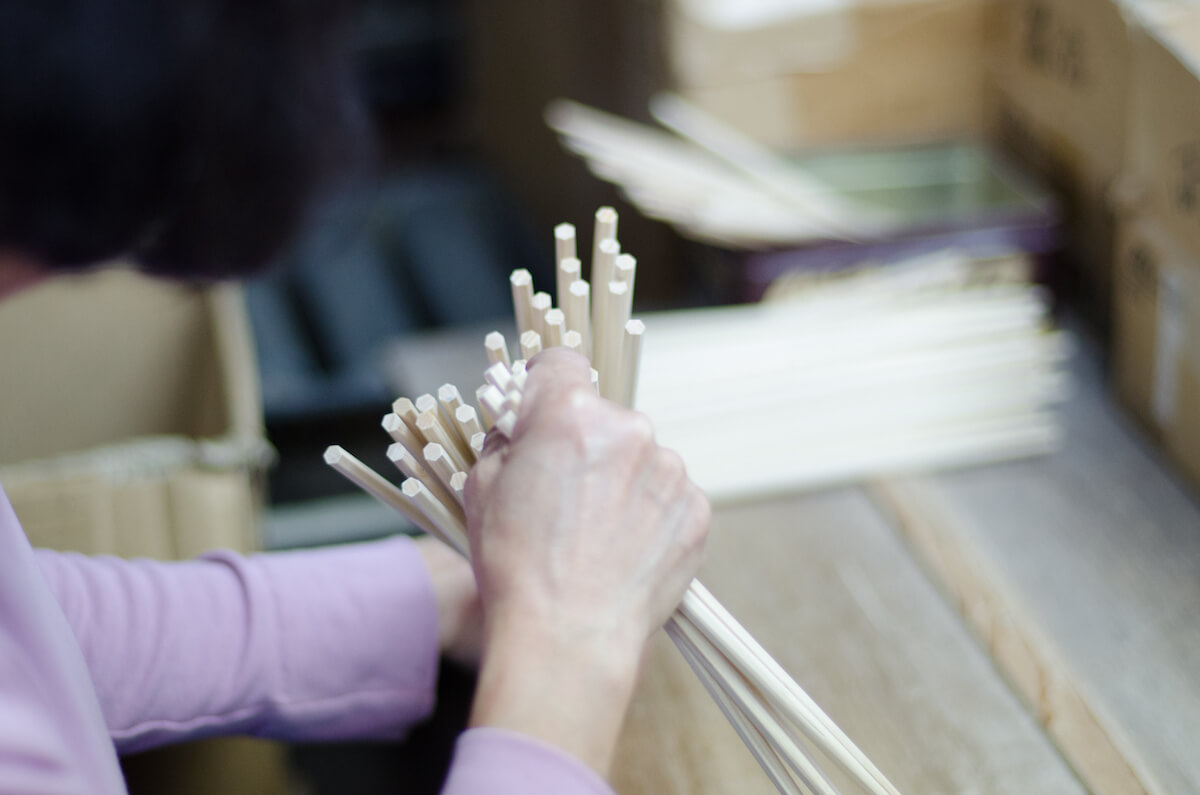 Are Chopsticks Sustainable? Exploring the Reasons Behind Eco-Friendly “Yoshino Waribashi” from Nara PrefectureIn recent years, we’ve seen a surge of news related to achieving a sustainable society: the rethinking of plastic straw usage, and the growing attention on products made from eco-friendly materials. One major driving force behind this is the United Nations’ Sustainable Development Goals (SDGs), a set of global objectives to be achieved by 2030.January 22, 2026
ENVIRONMENT
Blessed conditions
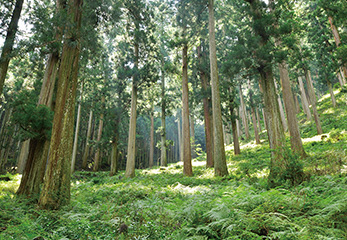
Forests occupy about 77% of Nara Prefecture’s total area. Yoshino, located in the southern part the prefecture, is blessed with very favorable climatic conditions for the growth of cedar and cypress trees, namely an annual rainfall of 2000 mm or more, an average temperature of about 14℃, relatively few typhoons and a winter snow accumulation of 30 cm or less.
Additionally, the soil is abundant in rocks containing minerals like limestone and rich in nutrients necessary for plant growth, including potassium phosphate and silicates.
Yoshino’s blessed natural conditions nurture high-quality “Yoshino wood”.
CHARACTERISTICS
The only tradition
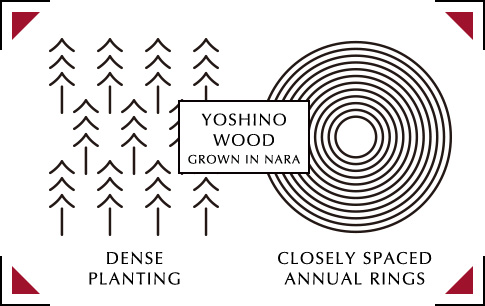
Dense annual rings
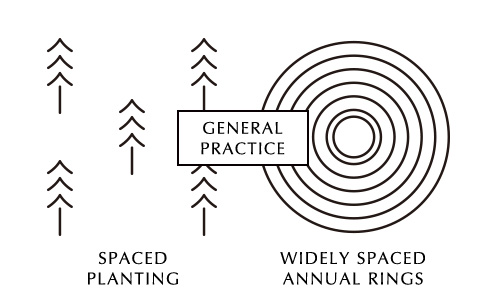
The effects of planting many trees and thinning them out frequently
Planted trees
per hectare
- General practice ABOUT 3,000
- YOSHINO WOOD ABOUT 10,000
Years until
final cutting
- General practice ABOUT 50 YEARS
- YOSHINO WOOD 100 YEARS OR LONGER
Planting trees closely together prevents them from growing too wide in diameter and ensures a dense wood grain. It also ensures that the bottom and the top sections of the trunk have approximately the same diameter.
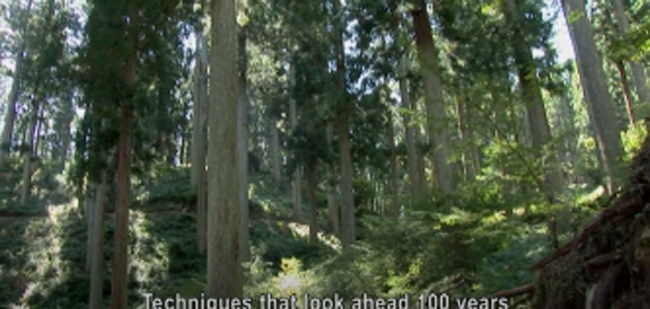
After having been planted, trees are carefully and repeatedly thinned out over a period of 100 or 200 years to ensure that they grow into selected high-quality wood.
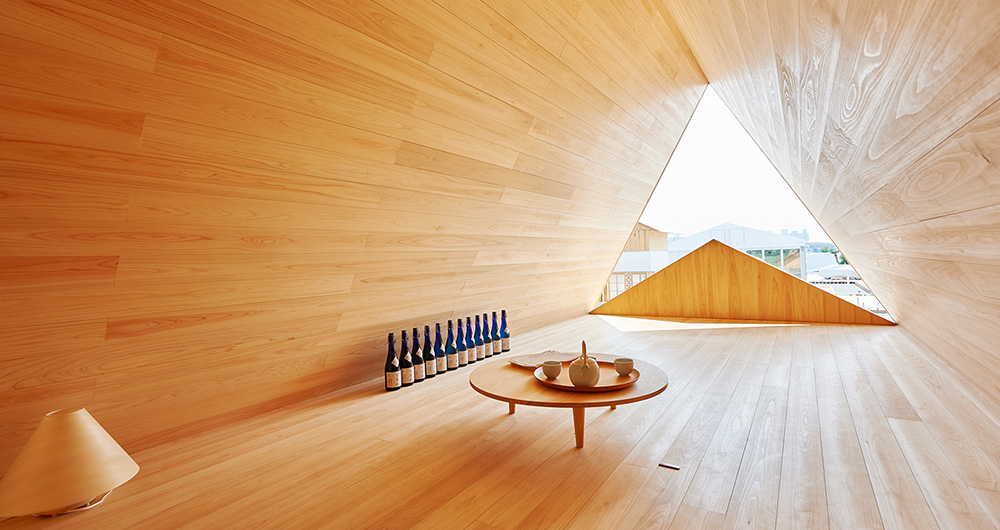
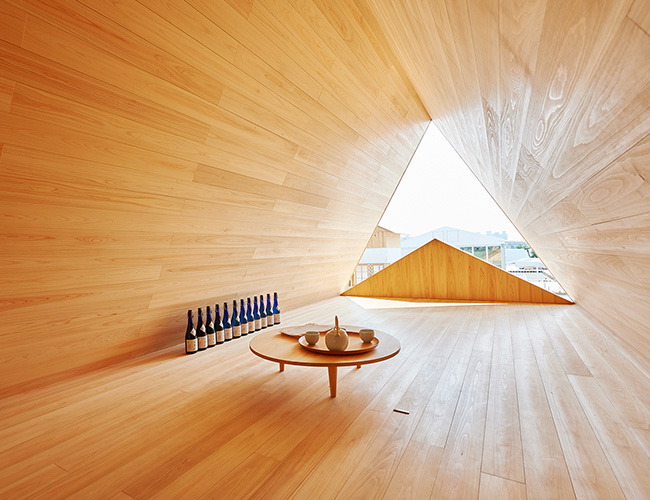
Few knots
Each and every tree in a vast forest is individually and meticulously cared for in a variety of ways. One of these is pruning, in which extra branches growing out of the trunk are removed manually. Careful pruning in a timely fashion allows the trees to grow uniformly and with few knots.
In addition, they are grown upright, which ensures straight and beautiful wood grain.
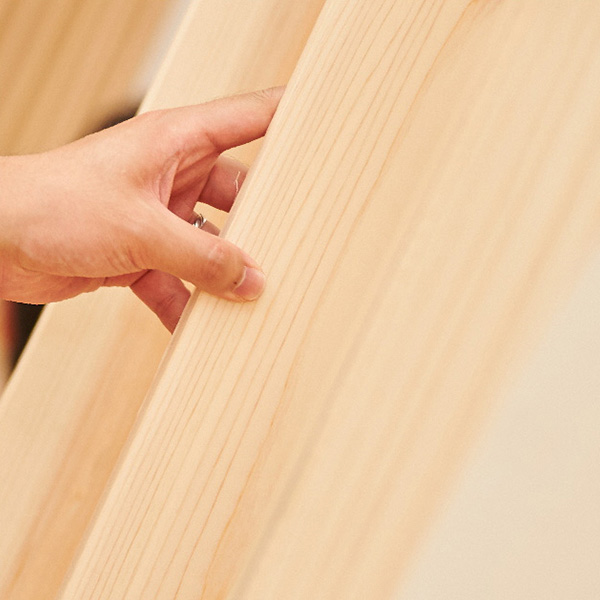
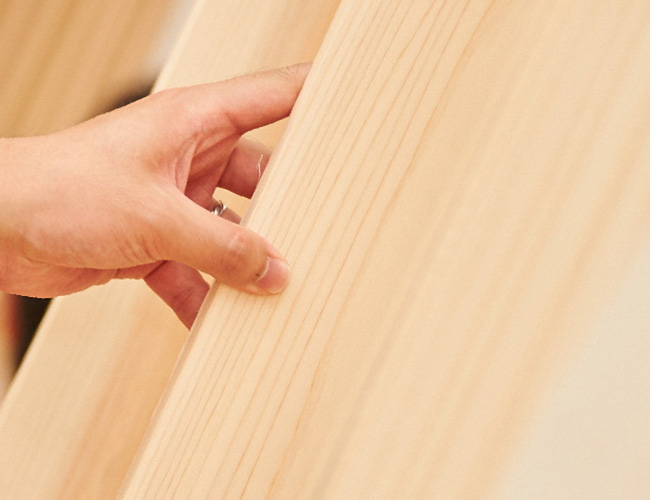
Attractive color
Yoshino wood has been admired for many years for its beautiful color and luster,and for this reason it has been widely used as a high-end interior material.
In particular, a technique called hagarashi (lit:“drying with leaves on”), consisting in laying them to dry on the forest floor with the leaves attached, is used. This way, moisture from inside the trunk drains slowly through the leaves, giving the wood an especially beautiful color.
Other characteristics
 Strong and supple
 Pleasant
to the touch Resistant to mold,
E.Coli and viruses Soothing scent
HISTORY
History of YOSHINO WOOD
500-year old forestry
Over the course of many generations, the people of the Yoshino region have carefully cultivated their forests. Through unique forestry methods such as dense planting and repeated thinning, Yoshino timber has been put to diverse uses, including castle building and sake barrel production, and has come to play a vital role in supporting Japan’s traditional culture, architecture, and craftsmanship.
Lumber transportation by rafts(at Yoshino River)
ARCHIVE
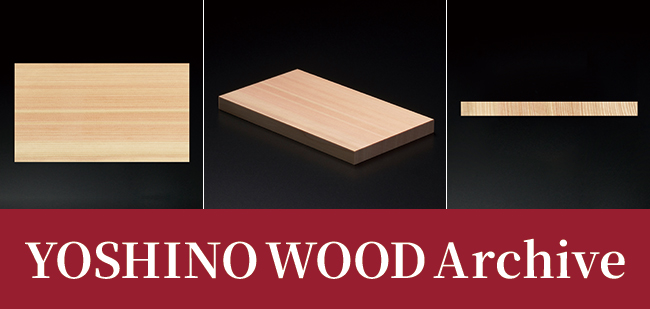
Yoshino Forestry and Its Traditions
This archive brings together tools used in real forestry settings, along with documentary materials such as written records and videos. Through these materials, visitors can learn about the unique techniques and system of Yoshino forestry, as well as the cultural and historical changes in forest use within the region since the early modern period, alongside the expansion of planted forests.
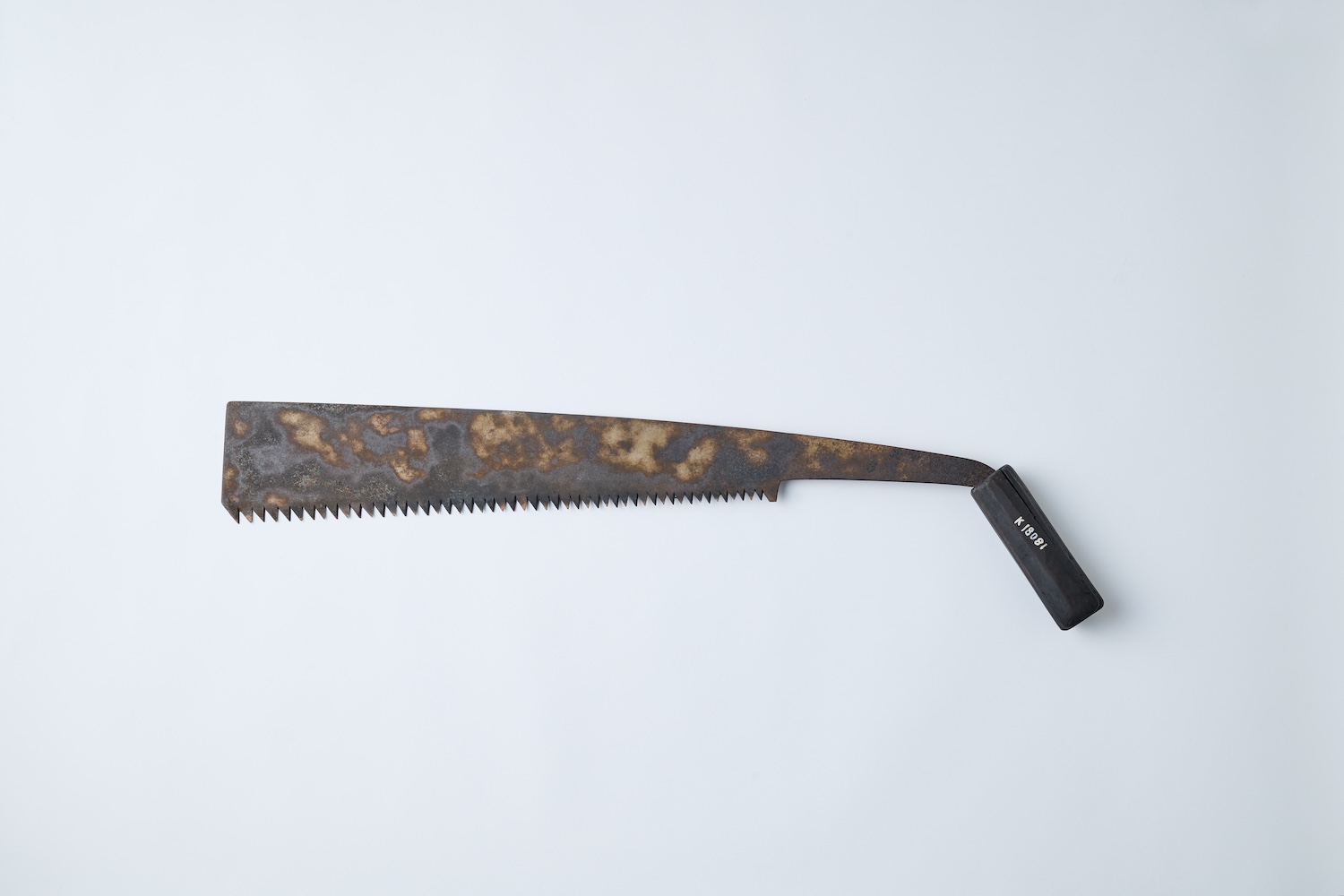
Tools
This section presents forestry-related tools used in the southern region of Nara Prefecture, including Yoshino District and nearby areas, along with tools used in the manufacture of forest products.
APPLICATIONS
Examples of applications
-
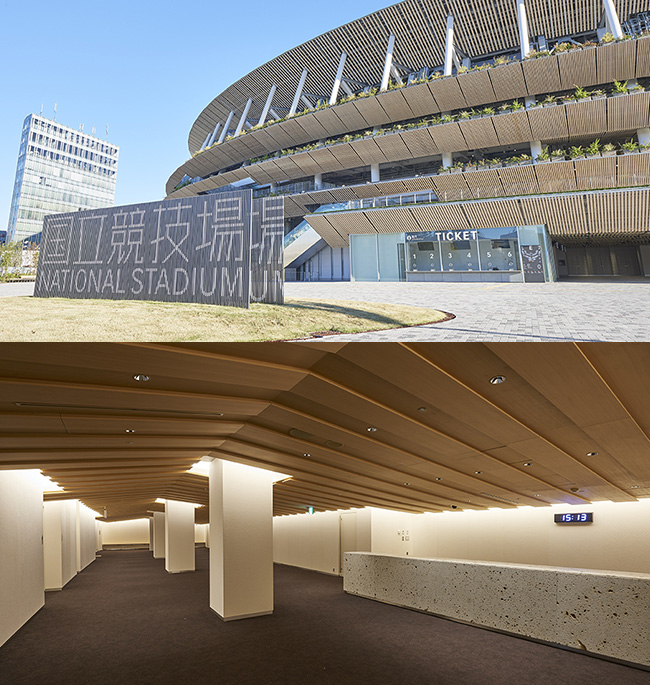 Copyright:JAPAN SPORT COUNCIL
JAPAN NATIONAL STADIUM
(Shinjuku-ku, Tokyo) The main stadium used for the Tokyo 2020 Olympic and Paralympic Games.
Based on the design by architect Kengo Kuma and others involved, different varieties of timber from all over Japan were used in this stadium. In particular, Yoshino cedar was used for the interior of VIP and VVIP lounges. Architecture -
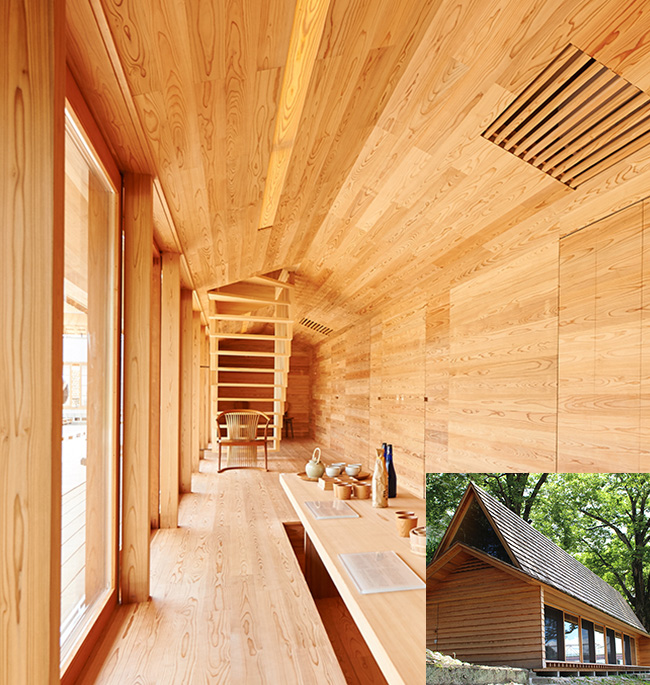
Yoshino Cedar House
(Yoshino Town, Nara) An accommodation facility created by architect Go Hasegawa in collaboration with Airbnb.
It was built by local sawmills and carpenters using abundant quantities of Yoshino cedar and Yoshino cypress. Architecture -
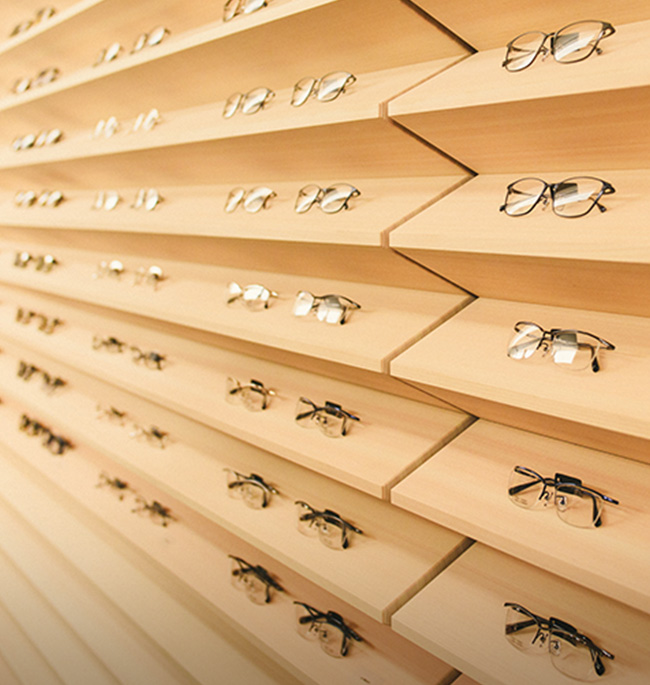 Source:https://www3.pref.nara.jp/naranoki/magazine/nara_interview_jins/
J of JINS Roppongi Hills store
(Minato-ku, Tokyo) Eyewear brand JINS’s new-concept store in Roppongi Hills aimed at high-end customers. The design is based on the Shoso-in treasure hall in Nara, and Yoshino cypress is used on every surface. Interior and miscellaneous goods -
 Photo: Katsuhiko Tsujimoto
2seater chair “muji” (studio Jig) A two-seater chair that makes the best use of the distinctive “long-grain, knot-free” properties of Yoshino cedar. It was made with a technique called “free form lamination” in which multiple thin veneers are stacked, laminated and crimped, making it possible to model wood freely. Interior and miscellaneous goods
-
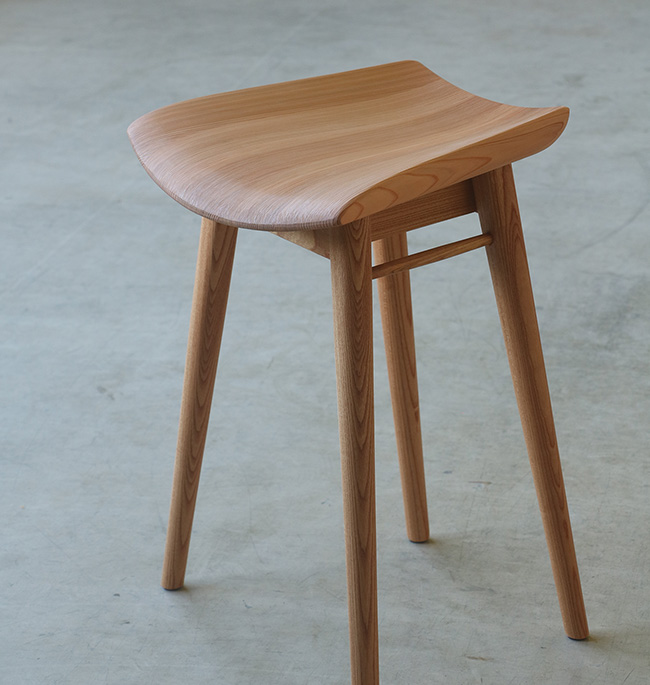
petal high stool (Mokkou Mori) A chair made by shaping Yoshino cedar by plane. The radiance and texture created by shaving the surface of the wood with a plane, without using sandpaper, bring out all the charm of Yoshino cedar. Interior and miscellaneous goods
-
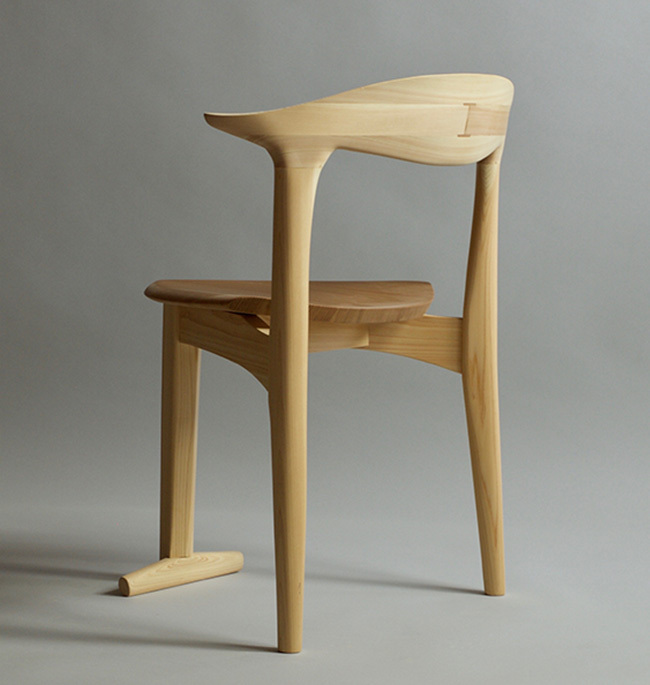
izr9 (Izuru) An unusual three-legged chair that takes advantage of the strength, tenderness, and beauty of Yoshino wood. The main structure is in Yoshino cypress, which has a distinctive smooth texture,while Yoshino cedar, which is comfortable to sit on, is used on the seating surface. Interior and miscellaneous goods
-
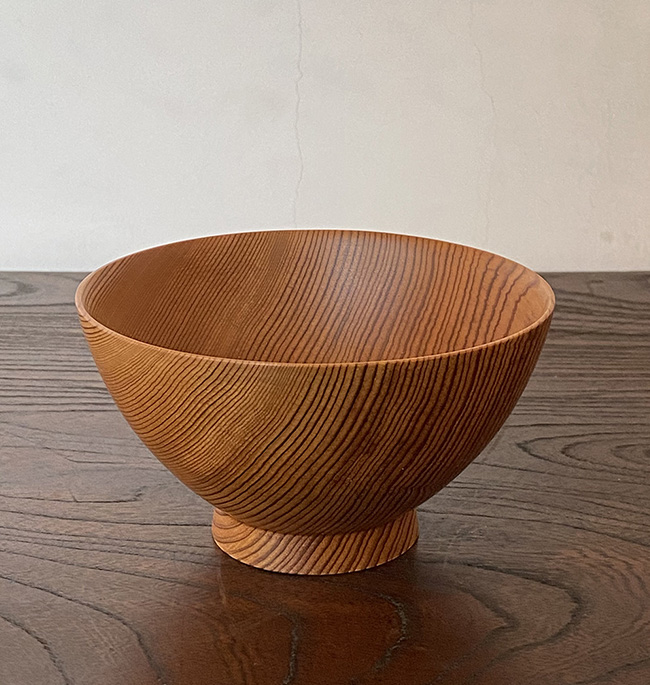
Tea bowl (Apple Jack) This bowl was made by hollowing out a block of Yoshino cedar on a potter’s wheel. It makes the most of Yoshino cedar’s warmth and the beauty of its wood grain, and it’s given a thin and light finishing by expert craftsmanship. Interior and miscellaneous goods
-
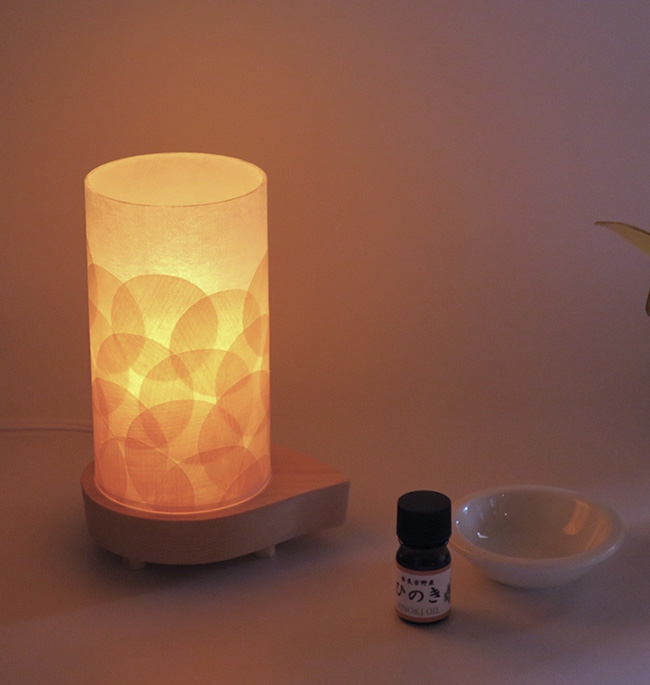
Aroma lamp (Akari Yoshino) An aroma lamp made by hand-laying thinly cut Yoshino cypress on top of Yoshino’s traditional handmade Japanese paper. Its soft light and the pleasant scent of Yoshino cypress oil create a soothing atmosphere. Interior and miscellaneous goods
-
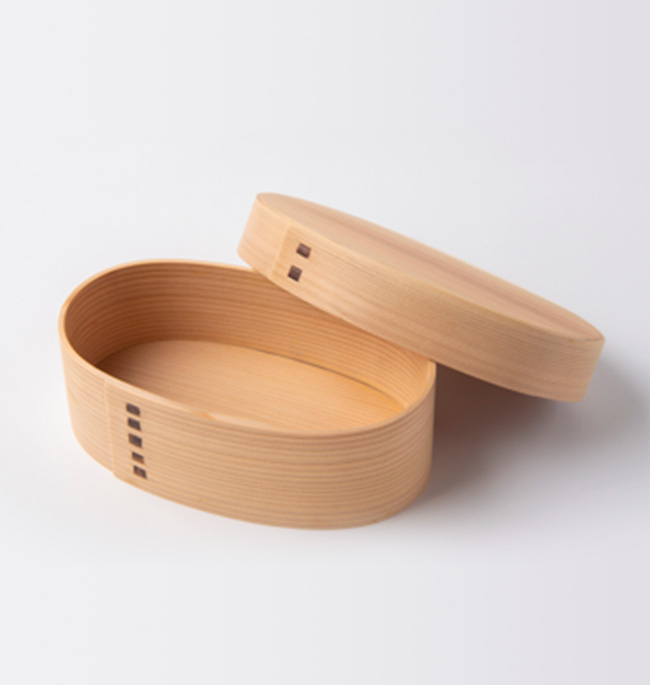
Wappa (TONBIYA WORKS) A bento (lunch box) made in traditional magewappa style by bending thinly processed wood. It allows one to fully appreciate the beautiful grain and the faint scent of Yoshino cedar. Interior and miscellaneous goods
Related Links
YouTube




Copyright © Nara Prefecture All rights reserved.
Unauthorized reproduction of the articles and photos on each page is prohibited.